
How to Match Hair Extensions to Your Hair Color
Match extensions to your hair at home: which part of your hair to compare, how to photograph it in daylight, and what to do if you fall between two shades.
Journal / Guides
Clip-ins, ponytails, toppers and glueless wigs compared: what each one does, who it suits, and how to choose shade, length and weight without a stylist.
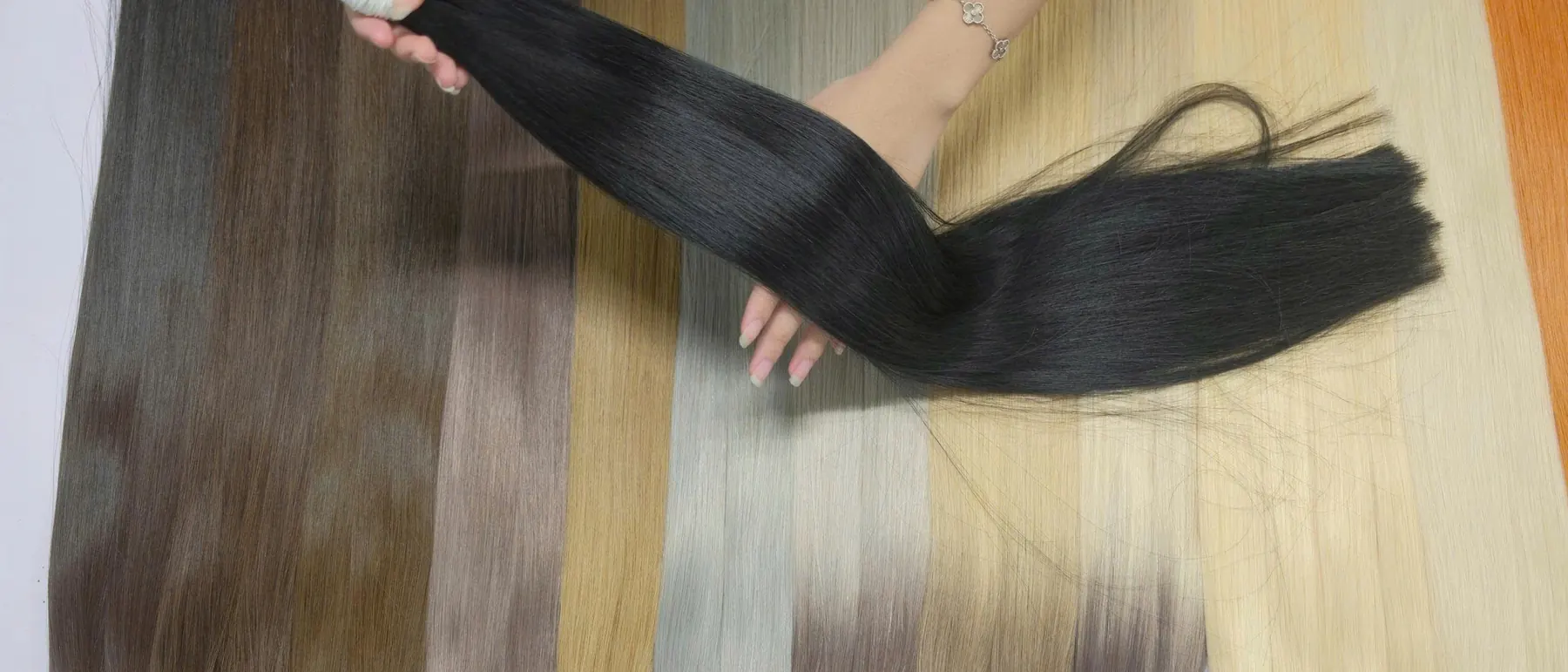
Adding length or fullness no longer means booking a salon, sitting through hours of bonding, or committing to months of maintenance. A whole group of hair pieces is made to go on in the morning and come off at night, and most people learn to wear them in a few tries.
In short: four types of human hair piece can be worn at home without a stylist: clip-in extensions for length and volume, ponytail extensions for an instant fuller ponytail, toppers for thinning at the crown or part, and glueless wigs for full coverage. The right one depends on what you want to change and how much of your own hair you have to work with.
At-home hair pieces attach with clips, combs or an adjustable band, so nothing is glued, heated or sewn into your own hair. You put them on in minutes and take them off before bed.
| Type | What it changes | Time to put on | Your own hair needs to be |
|---|---|---|---|
| Clip-in extensions | Length and volume, worn down or up | 5 to 15 minutes | At least chin length to hide the clips |
| Ponytail extension | A longer, fuller ponytail | 1 to 5 minutes | Long enough to gather into a ponytail |
| Clip-in topper | Fullness at the crown or part | 2 to 5 minutes | Present around the thinning area for the clips to grip |
| Glueless wig | Full coverage of the head | 5 to 10 minutes | Any length, or none |
Salon-fitted methods such as tape-ins, keratin bonds and micro-links stay in for weeks. They suit people who want extensions every day without the morning routine, but they need a stylist to fit, move up and remove them.
Your situation decides the type more than your hair color or budget does.
We make clip-ins and ponytails now, and toppers and glueless wigs are coming soon.
Shade, length and weight are the three choices that decide whether a piece blends or stands out.
Shade matters most. Extensions are sold by shade numbers such as #1B or #613, and those numbers are not the same across brands. Our guide to hair color numbers explains what each common code means, and our guide to matching extensions to your hair color shows how to compare in daylight.
Length should reach past your own ends far enough to make a difference, but not so far that your natural hair can no longer cover the top wefts. Our clip-in length guide gives a chart by current hair length.
Weight, measured in grams, sets how full the result looks. A 140g set suits fine to medium hair. Thicker hair needs more hair per weft to avoid a thin, stringy bottom half. See how many grams of clip-ins you need.
Human hair is worth the higher price if you want to heat-style the piece, wear it often, or blend it into your own hair up close. Synthetic fiber costs less and holds a preset style, but most synthetic pieces cannot take normal heat and they carry a shine that reads as artificial in daylight. Our comparison of human hair vs synthetic extensions works through cost per wear.
Single-donor hair comes from one person, so the color, texture and thickness stay consistent through the piece. Hair collected from many people and mixed together can show slight differences strand to strand. For a piece that sits right next to your own hair, that consistency is what makes it look like one head of hair. Read more in what single-donor hair is and why it looks more natural.
A well-matched piece that is the right weight for your hair is very hard to spot. The giveaways are almost always a shade mismatch, a length jump with no layers in between, or a set so heavy your own hair cannot cover the wefts. Getting shade and weight right before you order solves most of it.
We make every piece to order in our family workshop in Vietnam, in the length, texture and shade you choose. Allow 10 to 15 business days for making, plus tracked shipping time. Because each piece is made for you, we cannot take returns for a change of mind, which is why we match your shade for free before you order.
Send us a photo of your hair taken in daylight through our contact page and we will reply with the shade and length we would choose for you. When you are ready, our pieces are available in our Etsy shop.
Clip-in extensions, ponytail extensions, clip-in toppers and glueless wigs are all designed to go on and come off at home. None of them needs glue, heat or a salon appointment. Tape-ins, keratin bonds, micro-links and sewn-in wefts need a trained stylist to fit and remove them.
A wrap-around ponytail is the easiest: you tie your own ponytail, clip the piece on and wrap a strip of hair around the base, which takes a minute or two. Clip-in extensions come next. Most people take about 15 minutes the first time and under 10 once they have practised a few times.
Yes. Thin hair suits lighter clip-in sets placed a little lower on the head, and a topper suits thinning concentrated at the crown or part. The main rule is to avoid weight your own hair cannot hold, so choose fewer grams rather than more if you are unsure.