How to Match Hair Extensions to Your Hair Color
Match extensions to your hair at home: which part of your hair to compare, how to photograph it in daylight, and what to do if you fall between two shades.
Journal / Shade & color
What hair extension shade codes like #1, #1B, #2, #4, #27, #60 and #613 mean, why they differ between brands, and how to find the number closest to your hair.
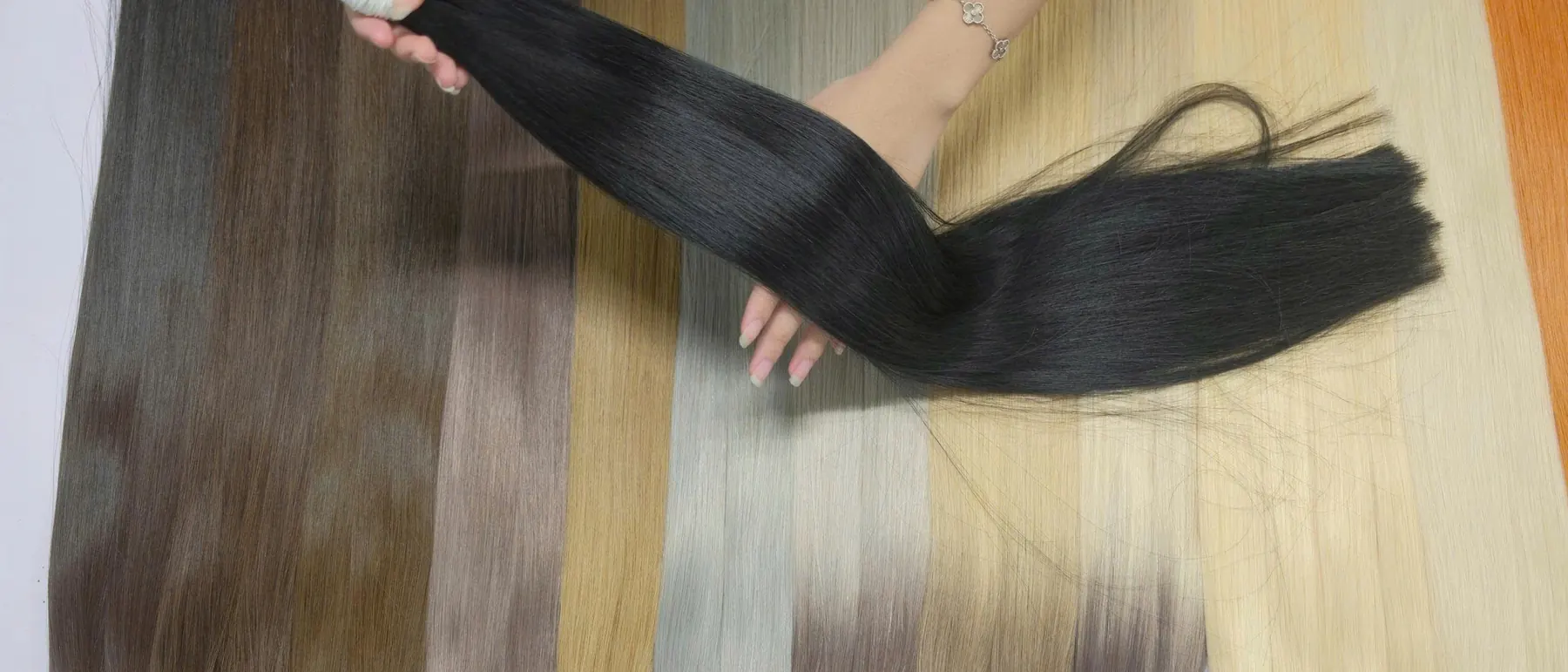
Hair extensions are sold by numbers such as #1B, #4 or #613, and the codes can feel like a secret language. They follow a simple pattern once you know it, with one catch that trips up most first-time buyers.
In short: hair extension shade numbers run from dark to light. #1 is jet black, #1B off-black, #2 darkest brown, #4 to #8 the browns, #18 to #27 the dark and honey blondes, and #60 and #613 the lightest blondes. The catch is that there is no universal standard, so the same number can look different between brands.
Hair color numbers work on a dark-to-light scale. Low numbers are the darkest shades and higher numbers are lighter. The system grew out of the level scale hairdressers use, where level 1 is black and level 10 is the lightest blonde, but extension brands later added their own codes such as #1B, #27, #60 and #613.
Two things follow from that history:
The table below shows how the most common codes are generally used and what our own shades look like.
| Code | Common name | Looks like | Often suits |
|---|---|---|---|
| #1 | Jet black | Deep black with a cool, blue-black depth | Hair dyed black |
| #1B | Natural black | Soft black, slight brown in sunlight | Most natural black hair |
| #2 | Darkest brown | Near-black brown, warm in daylight | Very dark brown hair |
| #4 | Dark brown | Rich chocolate brown | Dark brunette hair |
| #6 | Medium brown | Mid brown with warmth | Medium brunette hair |
| #8 | Ash brown | Light brown with a cooler tone | Light brown, dark blonde |
| #18 | Ash blonde | Dark blonde with a cool, muted tone | Dark ash blonde hair |
| #27 | Honey blonde | Warm golden or strawberry blonde | Warm blonde hair |
| #60 | Platinum blonde | Very pale, cool, almost white blonde | Platinum or silver-blonde hair |
| #613 | Bleach blonde | Very pale golden blonde | Light golden blonde hair |
Anything lighter than about #4 has usually been lightened, because very little natural hair is that light. Ask the seller whether the shade you want is natural or colored.
#1B is the most popular extension shade because most natural black hair is not a true jet black. Undyed black hair usually shows a warm brown cast in sunlight, and #1B has that same cast. Pure #1 is best kept for hair that has been dyed black, which looks deeper and flatter.
Mixed codes describe hair with more than one shade. The format varies by brand, but these are the usual meanings:
Because these vary so much, check the photos and ask if the description is not clear.
Your closest number is the one that matches the ends of your hair in daylight, not the roots. The ends are where extensions sit next to your own hair, and they are often lighter than the roots from sun and washing.
Three quick steps:
If you land between two shades, choose the darker one for dark hair and ask about blending two shades for highlighted hair. Our step-by-step guide to matching extensions to your hair color goes further, including how to photograph your hair so the color is accurate.
Grey and salt-and-pepper hair does not fit the standard number scale because it mixes pigmented and white strands. It is usually described by the share of grey, such as around 30%, 50% or 80% grey. If your hair is grey or going grey, send us a photo and we will tell you what we can match.
Numbers get you close, but only a side-by-side comparison confirms a match. Send us a photo of your hair taken in daylight through our contact page and we will reply with the shade we would choose. For more on picking the right piece, start with our beginner’s guide to at-home hair extensions.
1B is off-black or natural black: a soft black with a slight brown undertone that shows in sunlight. It is the most common natural shade for extensions because it matches most black hair that has never been dyed. Pure #1 jet black is deeper and cooler, and suits hair that has been dyed black.
613 is the lightest blonde most extension brands sell, a pale golden blonde sometimes called bleach blonde. Because hair has to be lightened to reach it, #613 is always colored hair. It suits very light blondes and is also the starting point for custom colors, since it takes toner and dye easily.
No. The codes follow a common pattern, with low numbers for dark shades and high numbers for light ones, but there is no single industry standard. One brand's #4 can be another's #6. Always compare the actual hair against yours in daylight rather than relying on the number alone.
#1 is jet black, the darkest shade, with a blue-black depth. #1B is off-black, one step softer, with a hint of brown. Most natural black hair is closer to #1B. If you are unsure between the two, #1B is usually the safer choice unless your hair is dyed.