
What Is Single-Donor Hair and Why Does It Look More Natural?
Single-donor hair comes from one person, so color, texture and thickness stay even. Here is what the term means, how it differs from mixed hair, and what to ask.
Journal / Hair quality
Human hair and synthetic extensions compared on look, heat styling, lifespan and cost per wear, so you can decide which is worth it for how you plan to wear them.
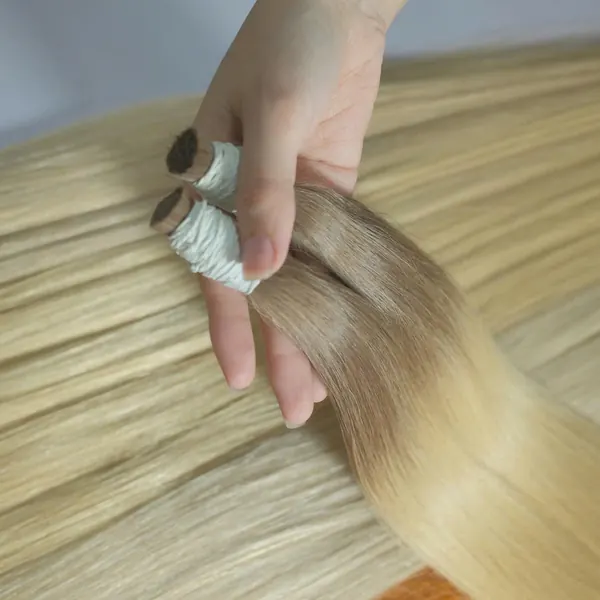
The price gap between human hair and synthetic extensions is large, so it is fair to ask whether human hair is worth it. The answer depends less on the hair itself than on how you plan to wear it.
In short: human hair is worth it if you will wear your extensions often, style them with heat, or wear them close to your own hair in daylight. Synthetic is fine for a one-off event, costume looks or a style you never want to change. Over many wears, human hair often costs less per wear, because it lasts much longer.
Human hair extensions are made from real hair cut from people. Synthetic extensions are made from man-made fibers shaped to look like hair. Everything else follows from that difference.
| Attribute | Human hair | Synthetic |
|---|---|---|
| Look in daylight | Natural sheen, blends with your hair | Uniform shine that can look artificial up close |
| Feel | Soft, moves like your own hair | Can feel slippery, stiff or tangle-prone |
| Heat styling | Can be straightened and curled | Most cannot take normal heat |
| Coloring | Can be toned or colored by a stylist | Cannot be dyed |
| Washing | Washes like your own hair | Needs special care, loses shape over time |
| Typical lifespan with regular wear | Often a year or more | Often a few months |
| Upfront price | Higher | Lower |
Human hair looks more natural because it is hair. It reflects light the same way yours does, falls with the same weight and moves when you turn your head. When extensions sit right next to your own hair, those small details are what make them disappear.
Synthetic fiber has improved a lot, and from a few feet away or in photos it can look convincing. The difference shows most in daylight, up close and when the hair moves.
Most synthetic extensions cannot be styled like your own hair, because standard synthetic fiber can frizz or melt under a straightener or curling iron. They arrive in a preset style and keep it. Heat-friendly synthetic fibers exist, but they handle only lower temperatures.
Human hair can be straightened, curled and blow-dried, which matters most when you want extensions to match your own hair on the day, whether you wear it sleek or wavy.
Human hair is worth the price when you count the cost per wear, not just the upfront price. A synthetic piece that lasts a few months and a human hair set that lasts a year or more are not the same purchase.
A simple way to compare: divide the price by the number of times you expect to wear it.
The real numbers depend on the products you compare and how well you care for them. Our guide on how many grams of clip-ins you need also affects value, because a set that is too light will not look right however good the hair is.
No. Human hair varies with how it was collected and processed. Hair from a single donor keeps one color and texture throughout, while hair mixed from many people relies more on processing to look even. Heavily processed hair can lose shine and tangle sooner. Our explainer on what single-donor hair is covers what to look for.
Choose human hair if you want your extensions to last, blend up close and take heat styling. Choose synthetic if you need a short-term look at the lowest upfront cost and will not style it with heat.
If you are new to extensions and unsure which type to start with, our beginner’s guide to at-home hair extensions compares clip-ins, ponytails, toppers and wigs.
All our pieces are single-donor human hair, made to order in your shade. Send a daylight photo of your hair through our contact page and we will suggest the right shade and length, or browse our clip-ins and ponytails in our Etsy shop.
Usually, yes, especially in daylight and up close. Synthetic fiber tends to have a uniform shine and can feel slippery or stiff, while human hair has the soft, varied sheen of natural hair. The difference is harder to see from a distance or in photos, which is why synthetic pieces often work well for a single event.
Most synthetic extensions cannot take normal heat from straighteners or curling irons; the fiber can frizz or melt. Some heat-friendly synthetic fibers tolerate low temperatures, but only within the limit on the label. Human hair can be heat-styled like your own hair, ideally with a heat protectant.
With regular wear and good care, human hair clip-ins often last a year or more, while synthetic pieces usually wear out within a few months. Lifespan depends heavily on how often you wear them, how you wash and store them, and how much heat you use.